Sal's site
I wrote this story about the now-deceased Bob Swisher, formerly of Urbana, Illinois, when I was in graduate school in 2016. He was an open and talkative guy who told me a lot about his life, even the dark parts.
An avid hunter and seller of antiques for more than four decades, 84-year-old Bob Swisher no longer buys anything he can’t lift. He also no longer strips and refinishes furniture. Yet like the durable treasures he scouts in tucked-away storefronts, Swisher is built to last. He understands, intimately, what personal restoration means.
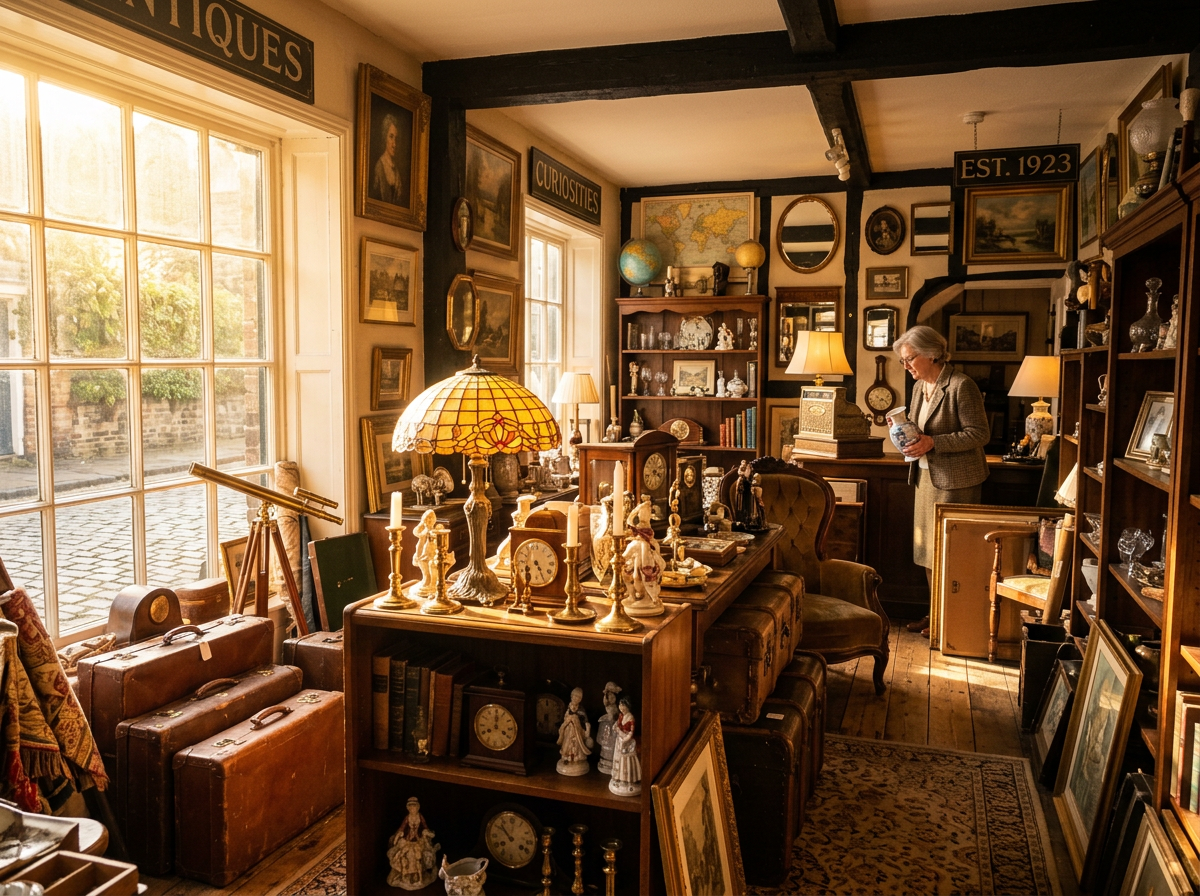
On a cloudless, chilly April morning, Swisher browses the wide aisles of Witchhazel Antiques in St. Joseph, Illinois—one of his favorite local haunts. Standing just under six feet tall with thin white hair, prominent sideburns, light green eyes, and the deep-set wrinkles earned by a life fully lived, he cuts a familiar profile. From the side, he bears a striking resemblance to former University of Illinois basketball coach Lou Henson. It’s a fitting comparison for a man who once hand-drew the iconic Chief Illiniwek logo for the UI Grants-in-Aid office.
Country music hums quietly in the background as Charles Lumsdon, the amiable owner of Witchhazel, approaches. Lumsdon will be 69 in November but doesn’t look a day over 50. “So, are you just out browsing around, Bob?”
“Yeah, Charlie,” Swisher replies, his voice carrying its signature gravel. “We’re going to lead off Saturday’s column with your going out of business thing. It’s just kind of a potpourri of subjects next Saturday.”
“Good, I appreciate it.”
The “column” is Swisher’s own—a fixture he has contributed to The News-Gazette for more than 19 years. Through it, he explores the sprawling world of regional antiquing, often weaving in his own history: his self-described addictive personality, his past venture as the co-op owner of Vintage Antiques in downtown Champaign, and his dedicated involvement with the Preservation and Conservation Association of Champaign County since the early 1980s.
In his upcoming piece, Swisher will document the staggered closing of Witchhazel. Lumsdon remains unfazed by the impending shift, ready for retirement. He gestures toward a separate wing of the store, noting there is “a lot of art and bigger stuff” back there. Taking his time, Swisher drifts toward the section.
Decades earlier, in his early 40s, Swisher’s hunting instincts were out in full force. He rented a 3,600-square-foot storage space in Champaign that ultimately overflowed with two decades of accumulated treasures: depression glass, stained glass, artifacts, architectural brackets, and heavy furniture. Alongside his second wife, Betty, he once priced the massive inventory to sell, netting nearly $25,000—enough to fund a living room addition for his Urbana home.
But back in the late 1960s, the luxury of owning things simply for the joy of them would have been unfathomable.
At the nadir of his life, Swisher stood in a Chicago airport holding a single suitcase containing his meager earthly possessions. Jaundiced, severely undernourished, and broken, he boarded a plane for California to get sober. A final, month-long bender awaited him out west before he threw himself into Alcoholics Anonymous with the same desperate abandon he once reserved for swallowing gin and Griesedieck Bros. beer.
Swisher had started as a social drinker. He and his first wife, Carol, were a popular, charismatic couple who frequented the local party circuit. But his swinging days in Champaign-Urbana eventually took a dark turn. “Swish,” as friends called him, became a heavy carouser, haunting local taverns like Bunny’s and the Esquire Lounge far too often.
Yet, when he wasn’t drinking, Swisher worked with fierce discipline. Following a four-year hitch in the Navy during the early 1950s—where he first experimented with marijuana and opium in Cuba—he climbed the ranks of the commercial arts field. As a talented young designer in his 30s, he built a stellar reputation working for Our Wonderful World Encyclopedia and Channel 3. He eventually launched his own business, the Swish Shop, doubling his salary through high-profile accounts with the Assembly Hall, Lincoln Square, and other major local enterprises.
But a bigger bank account only meant more money to get rip-roaring drunk.
Homer resident Kenneth Jones, now 77 and retired, got his professional start under Swisher at the Swish Shop. He remembers his early mentor as a tremendous teacher, recalling his struggles with protective fondness: “Bob’s always had a heart of gold, but he always came across as a bear, and he drank quite a bit back then.”
The first terrifying wake-up call arrived in the bathroom of the Tea Garden restaurant, where Swisher’s own alcoholic father worked as a manager. Swisher looked down to find blood in his urine. “I remember looking in the mirror and crying,” he says.
A few nights later, while bowling with a friend, the friend noticed blood trickling from Swisher’s ear. Soon after, Swisher’s doctor—a humorous man with a sharp bedside manner—laid it out straight: Swisher was bleeding from his orifices and wouldn’t see the age of 40 if he didn’t stop.
Amid the downward spiral, the Swish Shop collapsed into bankruptcy. Swisher filed for legal protection and took a job hauling trash.
“In all three phases of my life I was bankrupt,” Swisher reflects. Ironically, the future antique collector resorted to stealing items during his darkest era. “Morally, physically, and financially.”
He was an unfaithful husband and an absent father to his four sons. Disheveled and dispirited, he finally got on that plane to California with $500 in his pocket. A friend out there had offered a lifeline, and Bob Swisher wanted to live.
The scene shifts to another morning excursion, this time across the state line at the House with the Lions Antiques in Covington, Indiana. Swisher greets the owner, Carol Freese, asking after her health. Freese admits she’s “scared to say,” superstitiously knocking on the wood of a nearby table that’s up for sale.
Swisher beams, eager to share his own update. “My cardiologist told me I didn’t have to see him anymore,” he announces.
“Well, that’s good!”
“He said, ‘The way you’re going, Swish, you ought to live into the 90s.’”
Freese laughs. “Right on. Keep antiquing, right?”
“I’ve been kind of walking on air ever since then,” Swisher says.
The friend who met him in California all those years ago was named Barney, and he became Swisher’s AA sponsor. During his grueling first year out west, Swisher attended an astonishing 514 meetings. Reluctant at first, he sat in the back, watching men and women stand up to admit their powerlessness over alcohol, recounting lost marriages, lost careers, and shattered health. Yet beneath the wreckage, Swisher witnessed something unexpected: joy.
“They were up there sober and laughing and having a good time,” Swisher remembers. “I was jealous of what they had. I wanted to be a part of them.”
Swisher stayed in California for 22 months. He cleaned himself up, found design work, made good money, and slowly transformed into a man who could respectably return to Illinois. Back home, his children had been well cared for by Carol, a nurse, and two dedicated sets of grandparents. When a violent California earthquake shook the state and scared the bejesus out of him, Swisher took it as a sign. It was time to go home.
He returned to Illinois sober and hasn’t touched a drop of alcohol in nearly 46 years.
With a cleared mind and restored artistic precision, he launched a new commercial arts venture in the early 1970s called Abana Press Inc. The company went on to churn out an array of iconic business logos and marketing materials that longtime C-U residents still recognize today.
“Things just came right and the community accepted me back,” Swisher says. “I went from people walking across the street to avoid me to people saying, ‘Swish, can I get a meeting with you?’”
Sober but ultimately unhappy in his marriage, Swisher surprised his family by divorcing Carol. To fill the massive void once occupied by the taverns, he threw his obsessive energy into collecting antiques, often hunting alongside Gary Blum—who would later write psychological thriller novels under the pen name Gary Devon. When Swisher finally retired from Abana Press after 27 years, his hobby deepened into a full-time passion, taking him on cross-country picking trips.
Yet, it isn’t the thrill of the rare find, the supplemental income, the beautiful oak pieces adorning his home, or the stories he shares in The News-Gazette that Swisher treasures most about his lifelong hobby.
What he appreciates most about antiquing is simpler: it kept him clean, and it kept him alive.
Leaning against a counter in the Indiana shop, Swisher launches into an old, slightly irreverent anecdote, the kind that might raise eyebrows in politer circles. Within seconds, he has Freese, her coworker, and a stray customer laughing out loud.
“You caused a lot of trouble, didn’t you?” Freese teases.
“Well, it was a true story,” Swisher chuckles.
Another shop. Another dealer. Another story. Another laugh.
The old collector might just live long enough to match the vintage of some of his oldest possessions. But if his time comes tomorrow, Bob Swisher is entirely at peace. It has been a life gratefully salvaged, and beautifully restored.
Photo by Sal Nudo.
This story and eight others can be found in the book Far From Mars: Nine Creative Nonfiction Stories Featuring People and Places in Champaign-Urbana.