Sal's Site
My mom has always been a big reader. And even though she’s experiencing the long, slow slide of a deteriorating brain, I like to bring her books when I visit her at the memory care facility where she lives. Mom still gets absorbed in books despite her condition; for a long time, I’ve seen with my own eyes how books still give her much-needed stimulation.
I usually bring Mom coffee table books, one of which is about snack boards people can create by Maegan Brown, aka The BakerMama. I should write a note to Maegan telling her Mom loves looking at all the colorful, diverse food in her book.
Recently, I’ve been bringing my mom children’s books to look at, to see if their simplicity would be appealing to her. Also, I don’t think it hurts to bring her a new genre for the sake of mixing things up.
The first children’s book I brought Mom was about a John Deere tractor with human traits. The second one I offered her was about a group of kids living the cowboy life out West. Beyond viewing and commenting on some of the illustrations, I don’t think she was all that enamored with either read. For that matter, neither book made much of an impression on me.
Then one day I pulled out a children’s book from a shelf at home (my wife has kept these books from when our son was a child). The title was intriguing: Wanted: The Perfect Pet.
Fiona Roberton begins The Perfect Pet by letting readers know that “No ducks were harmed in the making of this book.” Funny!
Then we meet a little boy named Henry, who desperately wants a dog. He longs for his perfect pet while lying on the ground and staring at the sky, a piece of vegetation looping downward from his mouth. Henry has a large, bulbous head, pinpricks for eyes, and a bit of a paunch. He’s drawn by Roberton in a simple manner, yet even in his basic features one can recognize Henry’s sadness as he looks skyward.
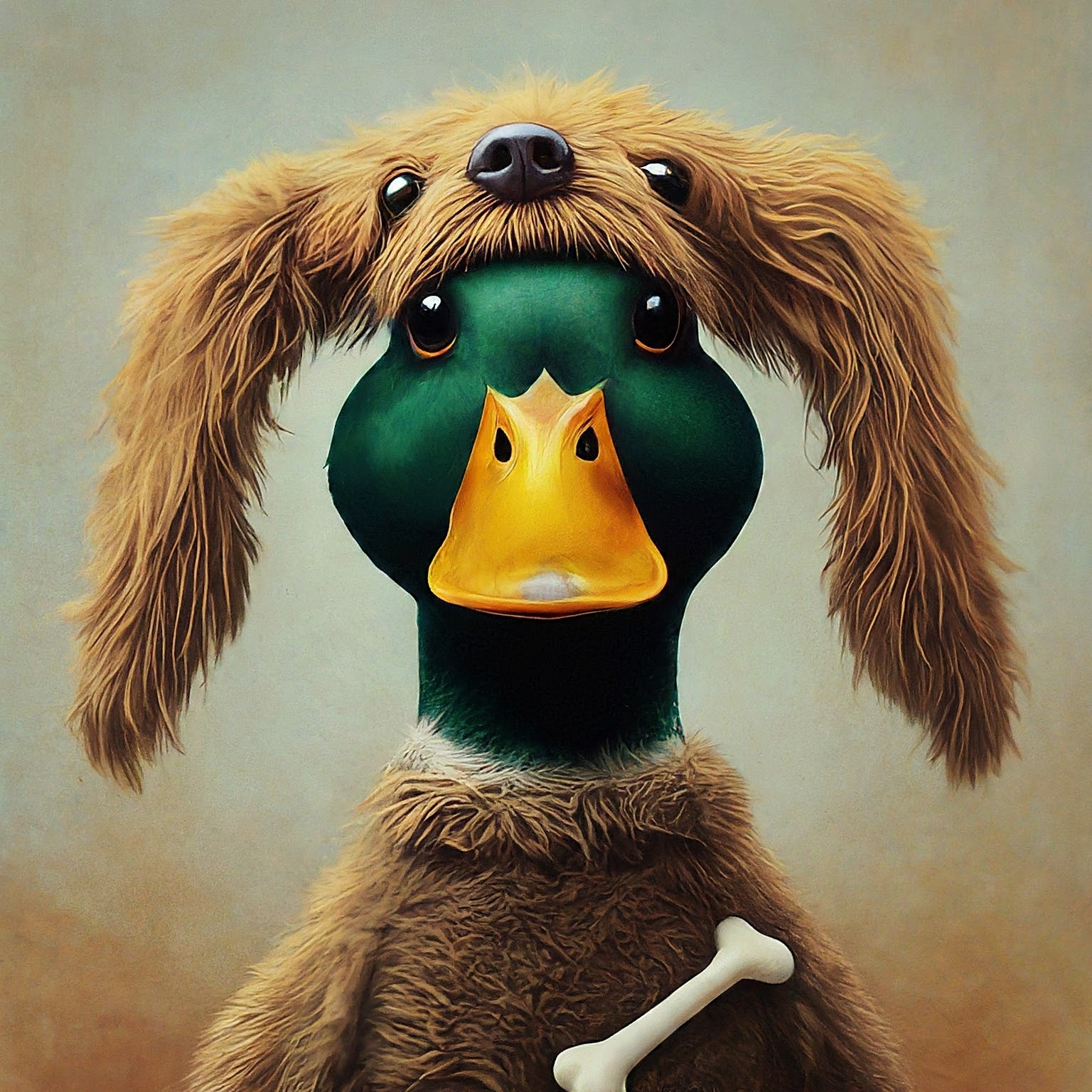
The boy decides to put an ad in the classified section of the hilariously named Daily Catastrophe newspaper. The title of the classified ad is “Wanted: The Perfect Pet.” Henry’s ideal pet, according to the ad, is one with a waggy tail, floppy ears, a warm furry tongue, and a few other cliched dog characteristics. Alongside Henry’s ad are seven other ones that are laugh-out-loud funny.” (One of the ads under the “For Hire” section reads: Woodcutter – Own axe, willing to travel.) Nice to see that authors of children’s books can write humor that makes non-kids chuckle.
Roberton’s slim book, published in 2009, has a second chapter titled “The Duck.” From here onward, the story becomes a beautiful blend of sad and sweet. This poor duck lives in the middle of nowhere on a “cold and windy hill.” It tries its best to stay entertained, but that’s hard to do in the nether regions of the world, and, let’s face it, when you’re so very alone. The duck sees Henry’s classified ad in the newspaper and, you guessed it, heads to 24 Tadpole Lane in Little Gribblington, where Henry and his family reside.
I’ll stop here because you should read this book. Life lessons of the story include how people may not always get what they want, but in unexpected ways, they get what they need. Keeping an open mind never hurts. Empathy should rule the day. Most importantly: We all have special talents and characteristics, and Henry is a smart little boy to see that.
My mom, in her state, won’t understand the content in The Perfect Pet. But she might notice the forlorn state of Henry as he daydreams about his future dog, or maybe observe the yippy little dog the boy imagines as being the perfect animal. Maybe she’ll notice the merriment and then the shock Henry feels as he realizes what the animal before him – drawn to him by his classified ad – actually is.
Or perhaps she’ll see other aspects of the book that escaped my attention. People with Alzheimer’s disease may have addled brains, but it sometimes seems like they can see things on a level we can’t. Maybe what they observe and say isn’t always crazy.
Whatever Mom gets out of The Perfect Pet, I think she’ll inherently understand its beauty.