Pip: If you've ever wondered what Def Leppard and a gated snare drum have in common with a journalism professor's pep talk, Sal Nudo's recent posts are here to connect those dots.
Mara: This episode covers two territories — what four-plus decades of one band can teach about resilience and long-term success, and how the studio itself became the instrument behind 1980s hard rock's impossible scale.
Pip: Let's start with the band and the lessons they left behind.
—
Def Leppard And Personal Resilience
Mara: The central question here is what makes some people and teams survive — and even thrive — across decades of setbacks, while others fold.
Pip: The answer arrives early, from an unexpected source. A professor working inside correctional facilities handed over six words that reframe everything: "But that's the fun of it!"
Mara: That line becomes the thesis. When Rick Allen lost his arm, the band didn't find a replacement — they rebuilt the physical apparatus around what he still had. Friction treated as a puzzle, not a verdict.
Pip: The book that grew from all this, Kings of the World: The Def Leppard Model for Success in Life, distills the band's career into what it calls the Leppard Laws — vision, loyalty, mentorship, reinvention. Rock history as operational philosophy.
Mara: Which required its own kind of obsessive craft — and that's exactly where the studio story picks up.
—
When the Studio Became the Instrument
Pip: The question driving this segment is how 1980s hard rock achieved a scale that still sounds physically impossible — and the answer has nothing to do with luck.
Mara: The post traces it to a deliberate break from what came before: "producers like Robert John 'Mutt' Lange, Bob Rock, and Michael Wagener stopped treating the studio as a passive capture room. They turned it into an active, high-gain musical instrument."
Pip: So the upshot is that the sound wasn't captured — it was engineered, layer by layer, from the room outward.
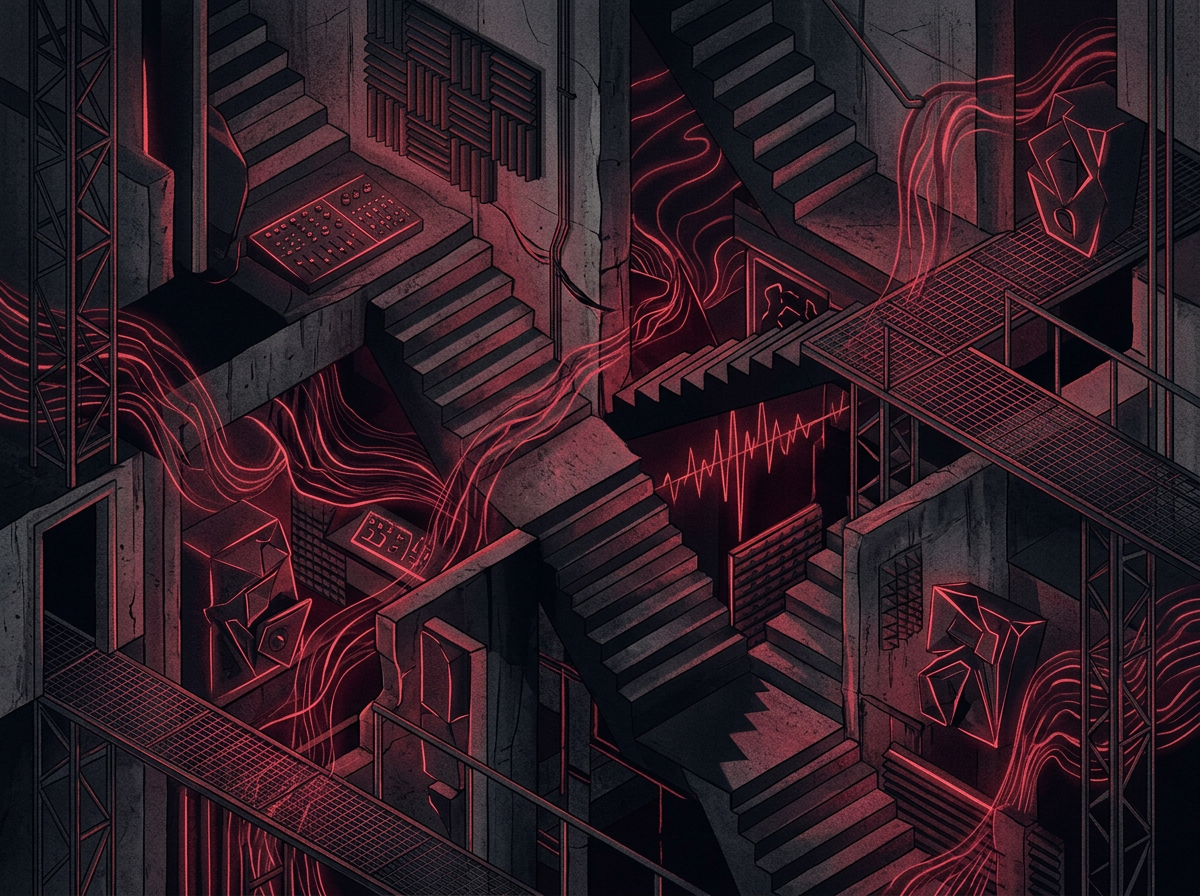
Mara: Concrete stairwells stood in for reverb chambers. Microphones were angled off-axis to shave harsh frequencies. Guitarists tracked individual single-note passes rather than full chords, so every string could be tuned with a strobe tuner between takes.
Pip: Hysteria took years and millions in unrecouped debt. Assistant engineers were cutting two-inch tape with razor blades at three in the morning. Mixes got dragged into studio parking lots to test through car speakers before anyone signed off.
Mara: And the post makes the case that this wasn't a historical curiosity. Transient triggers, micro-pitch vocal widening, sidechain compression — modern producers are still running the same playbook.
Pip: The book that unpacks all of it is 50 Studio Secrets That Defined 1980s Hard Rock, the first entry in a series called Behind the Glass: Chronicles of Rock, Gear and Studio Lore — fifty concise entries covering modified amp heads, gated drum physics, and the happy accidents behind the era's biggest records.
Mara: Great records, as the post puts it, are built through "obsessive curiosity, technical discipline, and the courage to push hardware deep into the red."
Pip: Which sounds a lot like the Leppard model, honestly — just with more oxide shedding from the master tapes.
—
Mara: Whether it's a band rebuilding around a one-armed drummer or an engineer running cables down an elevator shaft, the throughline is the same: treat the obstacle as the work.
Pip: More of that kind of thinking next time.