Playback on University Avenue: Hearing the Future of Space Rock
In the late 1990s, inside the warm, wood-paneled sanctum of Pogo Studio in downtown Champaign, Mark Rubel stood behind the console during a Parkland College recording course with the quiet, mischievous grin of someone about to let you in on the best-kept secret in rock and roll. Surrounded by racks of glowing vintage outboard gear and towering tape machines, he leaned over the board, made a few casual adjustments, and pushed up the faders.
Through the studio monitors came an overwhelming, majestic wall of sound: immense, drop-tuned guitar textures moving like tectonic plates, anchored by drums that felt as expansive as the Illinois prairie sky.
Mark was in the thick of engineering sessions for Hum’s Downward is Heavenward—the band’s highly anticipated, obsessively crafted follow-up to You’d Prefer an Astronaut—and he had cued up rough, work-in-progress mixes directly on Pogo’s playback system for our class to analyze. For a room of young students sitting inside an actual working, world-class studio trying to wrap our heads around signal flow, microphone placement, and tape saturation, it was an electrifying thrill. We weren’t merely studying theory in a sanitized lecture hall; we were sitting in the very room where history was being pressed to two-inch tape, guided by the master craftsman sculpting its sonic architecture.
That moment captured the essence of Mark Rubel. There was zero industry cynicism, no gatekeeping, and not an ounce of ego. To Mark, sound was an open playground of physics, art, and human emotion, and he was perpetually thrilled to hand you the keys to the control room.
Throughout Champaign-Urbana and far beyond, Mark was a gravitational force. Whether commanding a campus crowd under the stage lights as the charismatic leader of Captain Rat and the Blind Rivets, capturing landmark records at Pogo Studio, or mentoring students through Parkland, Eastern Illinois University, and the Recording Workshop, he was the community’s sonic alchemist. He did not merely record the sound of Central Illinois; he elevated it, nurtured it, and taught generations of musicians and engineers how to truly listen.
The Dual Life: Theatrical Frontman & Studio Architect
To understand Mark Rubel’s genius, you had to understand his dual identity. Depending on which night of the week you encountered him, he was either the flamboyant captain of the prairie bar circuit or the quiet, focused mastermind behind the glass.
As the bassist and comedic ringleader of Captain Rat and the Blind Rivets—a group he co-founded in 1980—Mark commanded stages across Central Illinois for more than four decades. Blending 1950s and ’60s rock-and-roll covers with theatrical skits, outrageous props, and lightning-fast wit, the Rivets were a genuine regional phenomenon. On stage, Mark was pure charisma, keeping thousands of fans laughing, dancing, and singing along at Mabel’s, the Red Lion, and outdoor campus street festivals. He often joked that his over-the-top stage persona was his “real self,” while his day-to-day mild manner was the disguise.
Yet that stage experience gave him an invaluable asset inside the studio: empathy for the player. Mark approached audio engineering from the perspective of a working bassist—the musician who holds down the rhythm, supports the structure, and knows when to step back and let the rest of the band shine.
That philosophy became the bedrock of Pogo Studio, which he founded in 1980. Originally operating out of Market Street before establishing its definitive home in an old brick warehouse at 35 East Taylor Street in downtown Champaign, Pogo was the antithesis of the sterile, corporate recording facility. Passing through its red door was like entering a warm, living museum of sound.
The control room was lined with an obsessive collection of vintage microphones, analog tape decks, glowing tube preamps, and historic outboard gear. But more than the gear, it was the atmosphere Mark cultivated. He designed Pogo as a creative haven where nervous first-time bands felt instantly at home and seasoned touring pros could let their guard down to capture something genuinely authentic.
The Prairie Tape Machine: Pogo’s Landmark Discography
Over more than three decades of continuous operation, Pogo Studio served as the sonic engine room for over 1,000 recordings, capturing an astonishingly eclectic cross-section of American music.
Mark’s versatility was boundless. He could move effortlessly between the delicate acoustic nuance of bluegrass icon Alison Krauss and the high-octane avant-garde guitar experimentation of King Crimson’s Adrian Belew. Major national acts—including Rascal Flatts, Fall Out Boy, and hip-hop heavyweight Ludacris—tapped Mark’s engineering prowess and Pogo’s analog warmth. Local heroes like Poster Children, Didjits, Salaryman, and the late Jay Bennett of Wilco regularly turned to Mark to track, mix, and shape their vision.
Yet for all the diversity of his clients, Mark’s work on Hum’s Downward is Heavenward stood as a masterwork of heavy sonic world-building. Tracking massive, drop-D guitars and thunderous live drum tones requires exceptional technical discipline; without precise microphone phase alignment and delicate dynamic management, dense walls of distortion collapse into muddy white noise. Mark understood how to give those colossal, celestial guitar arrangements room to breathe, capturing immense weight and pristine clarity on two-inch analog tape.
Whether working with a multi-platinum star or a group of college kids scraping together pocket change for an afternoon session, Mark approached every roll of tape with the same golden standard: honor the song, preserve the human dynamic, and capture the performance at the exact moment the magic happens.
The Master Educator: Demystifying Analog Tape and the Art of Listening
For all his accolades as a producer and performer, Mark Rubel considered teaching his highest calling. Long before high-end audio courses were standard academic offerings, Mark turned Pogo Studio into an open classroom for Parkland College and Eastern Illinois University, while also traveling regularly to instruct at The Recording Workshop in Ohio.
To Mark, the recording studio was never a temple of inaccessible wizardry; it was a workshop governed by acoustics, electricity, and empathy. He had an extraordinary gift for demystifying complex technical concepts—breaking down intricate signal chains, microphone polar patterns, and acoustic phase relationships with humor, visual analogies, and boundless patience.
Central to his teaching was his reverent, tactile philosophy regarding analog tape. In an era when early digital recording was tempting the industry with surgical cut-and-paste convenience, Mark championed the irreplaceable discipline and harmonic beauty of magnetic tape:
- The Commitment of the Track: Mark taught that tape forces musicians and engineers to make artistic decisions in the moment. Without endless digital “undo” buttons or infinite tracks, artists had to commit to their tones, their performances, and their arrangements right at the tracking stage.
- Harmonic Saturation as an Instrument: He demonstrated how driving signal onto tape created a musical, non-linear compression and gentle harmonic saturation that no early digital plugin could replicate—giving low-end bass thickness and smoothing harsh high frequencies naturally.
- The Human Performance over Perfection: To Mark, the tiny micro-fluctuations in timing, room bleed, and human dynamics weren’t flaws to be gridded or autotuned away; they were the very soul of the recording.
Above all, Mark taught his students how to listen. He insisted that the most critical piece of gear in any studio wasn’t a coveted Neumann microphone or an expensive compressor, but the space between an engineer’s ears. He urged young producers to listen with humility—to understand what the song required, to support the artist emotionally, and to always serve the emotional truth of the performance.
From Downtown Champaign to Nashville: The Blackbird Chapter and an Enduring Light
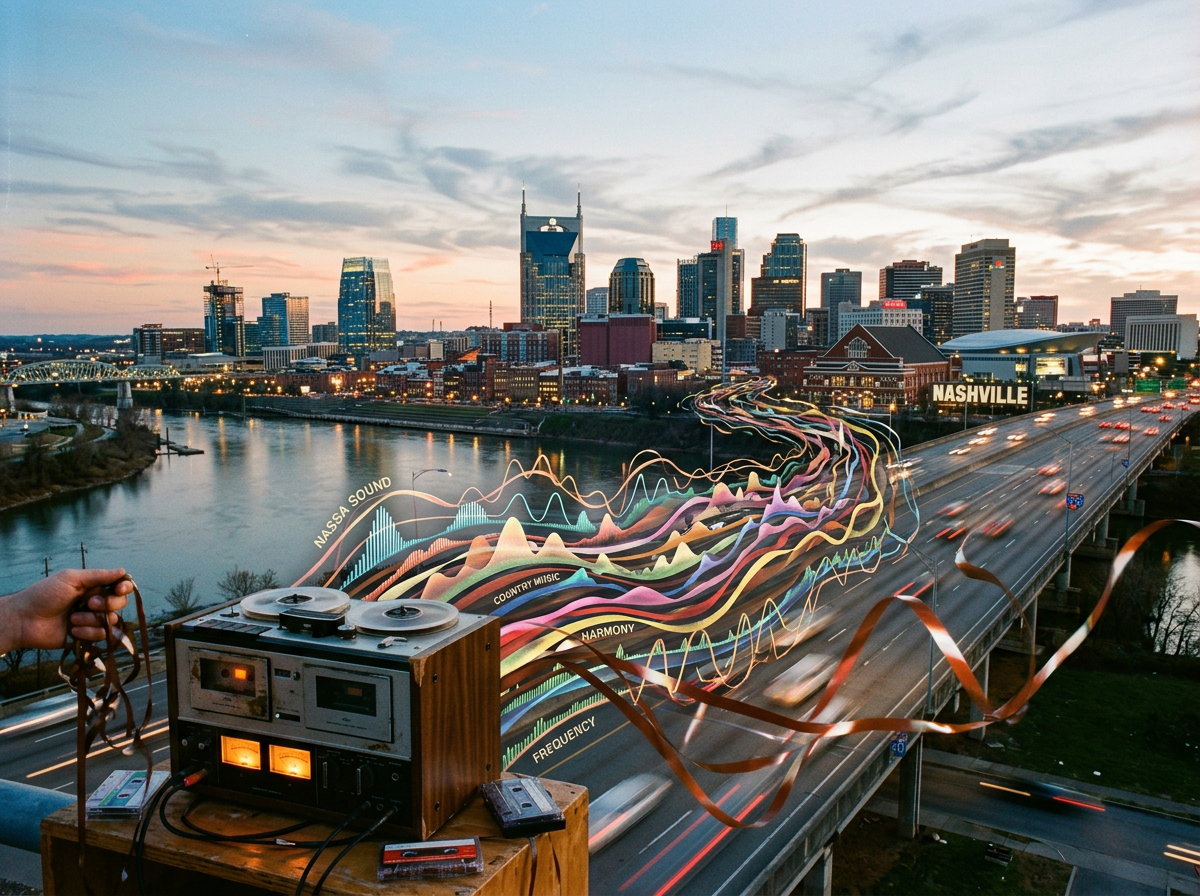
In 2013, after more than three decades anchoring the Central Illinois creative community, Mark closed the Taylor Street location of Pogo Studio and embarked on a major new chapter in Nashville, Tennessee. He was recruited to serve as the Director of Education and Instructor at The Blackbird Academy—the elite audio engineering school housed within the legendary Blackbird Studio, owned by John and Martina McBride.
In Nashville, surrounded by one of the greatest collections of vintage and modern recording gear on Earth, Mark brought his signature midwestern warmth, infectious enthusiasm, and deep pedagogical mastery to thousands of aspiring engineers from across the globe. He was in his element: wandering through world-class live rooms, mentoring young engineers through high-stakes tracking sessions, and serving as a beloved ambassador for the recording arts across the Audio Engineering Society (AES).
When Mark passed away, the shockwaves traveled throughout the entire international audio community. Tributes poured in from platinum-selling artists, Nashville session giants, and global studio icons—yet some of the most poignant remembrances came from the hundreds of local musicians, garage bands, and community college students whose lives he forever altered in downtown Champaign.
Mark Rubel was a rare figure who could make an entire gymnasium erupt in laughter while wearing a ridiculous costume on Friday night, and then meticulously sculpt a masterpiece of celestial alternative rock on Saturday morning. His legacy lives on not only in the grooves of Downward is Heavenward, the historic discography of Pogo Studio, and the halls of Blackbird Academy, but in the ears and hearts of everyone who ever had the profound privilege of sitting beside him at the console.